Most landlords do not plan to be reactive. They simply get busy.
A leak shows up. A tenant calls. The HVAC fails during a heat wave. The roof starts dripping during a storm. The response becomes immediate. Urgent. Expensive.
Then the cycle repeats. What many Baltimore property owners do not realize is that the difference between preventative maintenance for Baltimore rentals and emergency repairs in Baltimore rental properties is not just convenience. It is financial stability.
And when you start examining long-term Baltimore rental maintenance costs, the pattern becomes obvious. Reactive ownership costs more.
Let’s see why.
The Illusion of Saving Money
Some landlords avoid scheduled maintenance because it feels optional.
If the furnace is working, why inspect it?
If the roof looks fine, why schedule a check?
If the plumbing has not burst yet, why disturb it?
On the surface, skipping preventative maintenance for Baltimore rentals feels like saving money. But that logic usually collapses over time.
Small, manageable issues become large, expensive ones. What could have been a minor fix turns into water damage. Mold. Structural repair. Extended vacancy.
Emergency repairs in Baltimore rental properties almost always cost more than planned servicing. They also come with tenant frustration and potential lease non-renewal.
And turnover tied to unresolved maintenance issues quietly drives up Baltimore rental maintenance costs in ways that do not show up on a single invoice.
Baltimore’s Climate Is Not Forgiving
Local conditions matter. Baltimore experiences humid summers, freeze-thaw winters, heavy rainfall, and aging infrastructure. These factors accelerate wear on:
- Roofing and Gutter systems
- Plumbing lines
- Exterior masonry
- HVAC equipment
- Basements and foundations
Ignoring seasonal preparation is one of the most common mistakes landlords make.
Owners who follow a structured seasonal maintenance plan for Baltimore landlords often prevent the kinds of winter pipe bursts and summer AC failures that create emergency chaos.
Weather does not negotiate. It exposes weak points.
The Real Cost of Emergency Mode
Emergency repairs in Baltimore rental properties rarely happen at convenient times.
They happen at night. On weekends. During holidays. During storms.
That means premium labor rates. Expedited materials. Temporary housing in some cases.
Beyond direct repair costs, emergencies also create secondary expenses:
- Interior damage
- Tenant compensation
- Insurance claims
- Inspection follow-ups
- Vacancy if repairs are extensive
When landlords examine long-term Baltimore rental maintenance costs honestly, they usually find that one or two major emergencies wipe out any “savings” from skipped preventative service.
It is not dramatic. It is arithmetic.
Routine Inspections Change Everything
Preventative maintenance for Baltimore rentals is not complicated. It is structured.
- Regular walkthroughs identify small leaks before they flood.
- HVAC servicing extends equipment lifespan.
- Gutter cleaning prevents foundation issues.
- Caulking and sealing reduce water intrusion.
Landlords who implement routine inspections that prevent major repair surprises typically experience fewer disruptive calls.
The irony is that inspections are often viewed as extra work. In reality, they reduce future work.
Professional property managers treat inspections as part of risk management. Not as an afterthought.
The Tenant Experience Factor

Maintenance affects more than structure. It affects retention. When tenants submit requests and see delays, they begin evaluating alternatives. In competitive areas of Baltimore, that evaluation happens quickly.
Emergency repairs in Baltimore rental properties can damage trust if they appear preventable.
On the other hand, consistent upkeep builds confidence. Tenants are more likely to renew when they believe the property is professionally managed.
This connects directly to broader asset protection strategies. Landlords who follow preventative maintenance practices tailored to Baltimore rental properties often experience both lower repair bills and stronger lease renewals.
Maintenance and retention are tied together more than many realize.
The Roof, The Pipes, and The Systems Nobody Sees
Certain systems create disproportionate risk:
- Roof integrity
- Main water lines
- Sewer connections
- HVAC units
- Foundation drainage
When these fail, damage spreads quickly.
That is why ignoring small warning signs can escalate fast. A minor drip becomes structural damage. A slow drain becomes sewage backup.
Owners who have dealt with scenarios similar to unexpected pipe failures in older Baltimore homes understand how quickly small neglect becomes major expense.
Proactive servicing limits exposure.
Eco-Friendly Upgrades as Preventative Strategy
Preventative maintenance for Baltimore rentals is not only about repairs. It can include upgrades.
- Energy-efficient windows reduce HVAC strain.
- Modern insulation lowers moisture issues.
- Updated plumbing fixtures prevent leaks.
- Smart water shut-off devices reduce flood risk.
Even modest improvements contribute to reducing long-term Baltimore rental maintenance costs.
Landlords sometimes treat upgrades as cosmetic. In reality, many upgrades function as risk control.
Why Landlords Still Stay Reactive
If the math favors prevention, why do so many owners operate in emergency mode?
Usually because:
- They underestimate cumulative risk
- They overestimate system durability
- They lack structured scheduling
- They manage properties part-time
- They prioritize short-term cash flow
Emergency repairs in Baltimore rental properties feel urgent and visible. Preventative maintenance feels quiet and optional.
But quiet systems often protect profit better than reactive scrambling.
How Structured Maintenance Protects ROI
When landlords treat preventative maintenance for Baltimore rentals as part of their investment strategy, performance stabilizes.
Fewer sudden expenses.
More predictable budgeting.
Lower vacancy tied to repair delays.
Longer system lifespan.
Property managers often create annual calendars covering:
- Seasonal inspections
- HVAC servicing
- Roof checks
- Safety equipment testing
- Drain cleaning
- Exterior sealing
The goal is not perfection. It is control.
Long-term Baltimore rental maintenance costs become easier to forecast. That predictability supports stronger overall ROI.
When Emergency Repairs Are Unavoidable
Not every emergency can be prevented. Storm damage happens. Aging infrastructure occasionally fails. Tenant misuse occurs.
The difference is frequency.
Landlords operating with preventative systems experience fewer catastrophic failures. When emergencies do happen, they are isolated rather than systemic.
There is a measurable difference between occasional unpredictability and chronic crisis management.
Final Thoughts
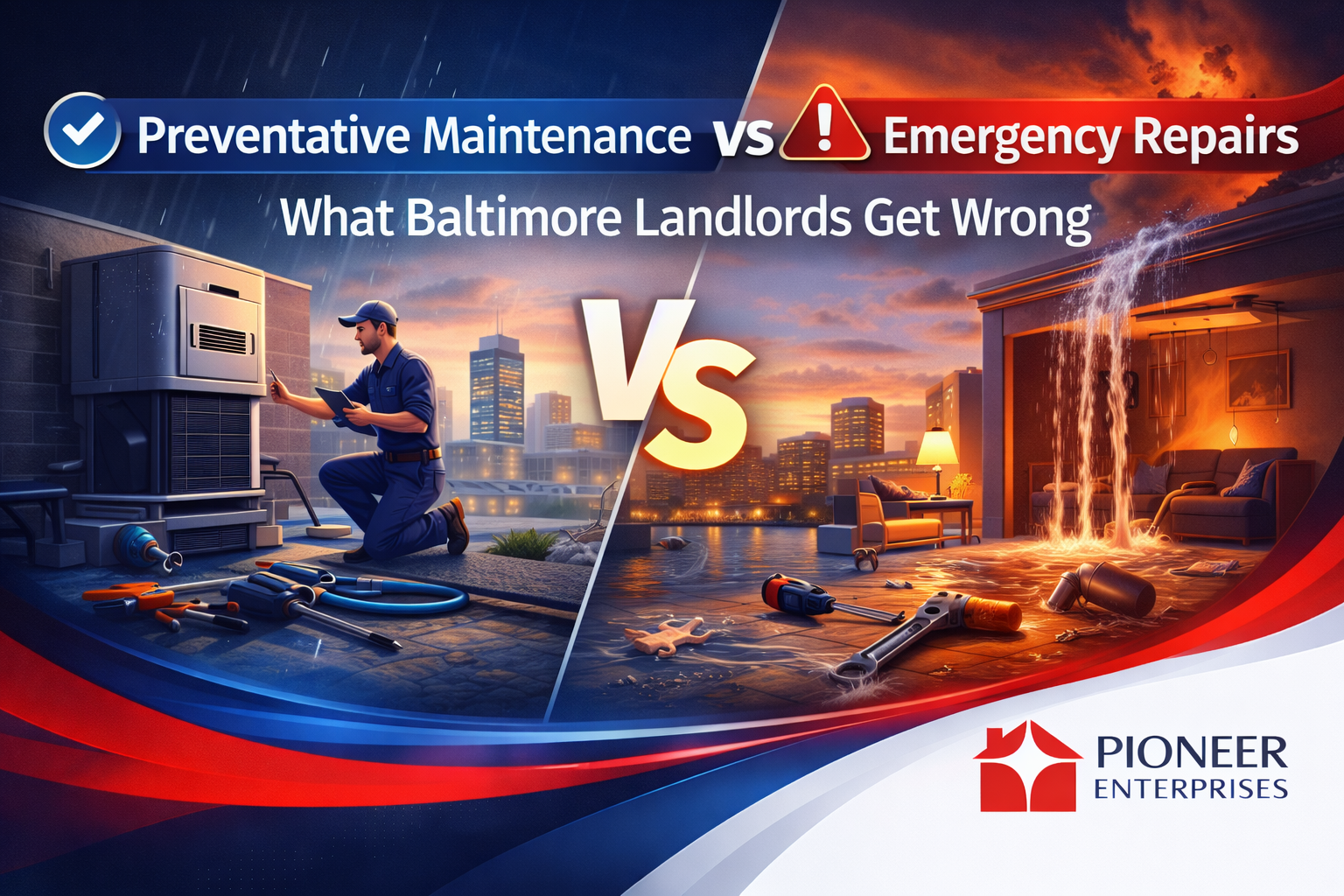
Preventative maintenance vs emergency repairs is not a philosophical debate. It is a financial one.
If you are evaluating your Baltimore rental maintenance costs over the past few years, ask a simple question: how many of those expenses could have been reduced or avoided with earlier intervention?
Most owners already know the answer.
At Pioneer Enterprises, we help Baltimore landlords shift from reactive repairs to structured, preventative systems that protect both property value and tenant stability. If you are ready to reduce emergency calls and create a more predictable rental operation, we are glad to walk through your current maintenance approach and identify gaps.
FAQs
1. Why is preventative maintenance better than emergency repairs?
A: Because small issues caught early cost less to fix and prevent larger structural damage.
2. How often should Baltimore rental properties be inspected?
A: Most landlords benefit from seasonal inspections plus annual system servicing.
3. Do emergency repairs really cost that much more?
A: Yes. After-hours labor, water damage, and tenant disruption significantly increase total costs.
4. Can preventative maintenance improve tenant retention?
A: Absolutely. Tenants are more likely to renew when maintenance is consistent and responsive.
5. Are upgrades part of preventative maintenance?
A: Yes. Modern fixtures and energy-efficient improvements reduce system strain and long-term repair risk.